
Published by FindMyMarathon.com
Updated: November 16, 2025
 The California International Marathon (CIM), a historic point-to-point race established in 1983 by the Sacramento Running Association, unfolds over a net-downhill course from Folsom to Sacramento. This well-regarded marathon, celebrating over 40 years of its original route, draws a diverse field, from runners aiming for a strong first marathon, those chasing Boston Marathon qualifying times and elite athletes looking to earn prize money. Renowned for its speed, largely attributed to its overall descent and minimal sharp turns, CIM presents a compelling opportunity for fast times.
Start Location: Folsom, California
Finish Location: Sacramento, California
Elevation Change: Net downhill of approximately 340 feet
Course Type: Point-to-point
USATF Certified: Yes (Boston & World Marathon Majors Qualifier)
Typical Weather: Temperatures typically in the mid-40s at the start, reaching the mid-50s by the finish
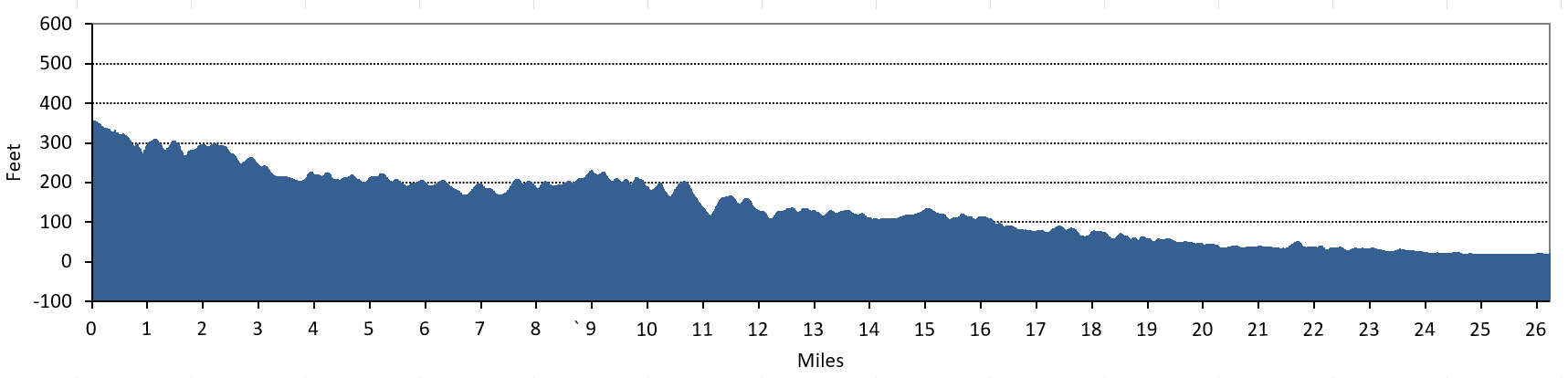
The 26.2-mile journey begins in the foothills of Folsom at an approximate elevation of 340 feet and culminates at the California State Capitol, roughly 20 feet above sea level. This results in a significant net elevation loss of 1,003 feet (305 meters), although runners will encounter around 663 feet (202 meters) of total elevation gain across several gentle inclines.
To craft the ideal pacing strategy, it's essential to understand the different segments of the California International Marathon. Here's a breakdown of the course, highlighting key characteristics and offering pacing recommendations for each section:
Terrain: Gentle downhill with some flat sections
Elevation Change: -170 feet overall
Key Features: Open highway with views of Lake Superior

The race commences with an inviting downhill stretch in the very first mile (a drop of 80 feet), offering a tempting sensation of speed. However, the rest of this section is made up of small rolling hills with longer downhills than uphills which drops you 90 more feet over the remaining 5.5 miles.
Pacing Strategy: Ease into this early portion of the race by running the initial miles at a pace slower than your target marathon pace. Prioritize finding a comfortable and sustainable rhythm to conserve energy for later. Consider this early section as an extended warm-up, giving your body time to adapt to the race demands. Instead of rigidly sticking to a specific pace, focus on maintaining a comfortable effort level. Be mindful that the downhill terrain might make a faster pace feel easier than it actually is. It's extremely important not to run a faster than goal pace in the early few miles. Save your energy for later in the race.
Terrain: Rolling hills with a net increase in elevation
Elevation Change: +45 feet overall
Key Features: Toughest section of the course
This portion of the course is characterized by a series of small, gradual rolling hills with a net increase in elevation. It's generally considered the toughest section of the course physically. The constant inclines and declines requires adjustments in your stride and pace, but your effort level should remain the same.
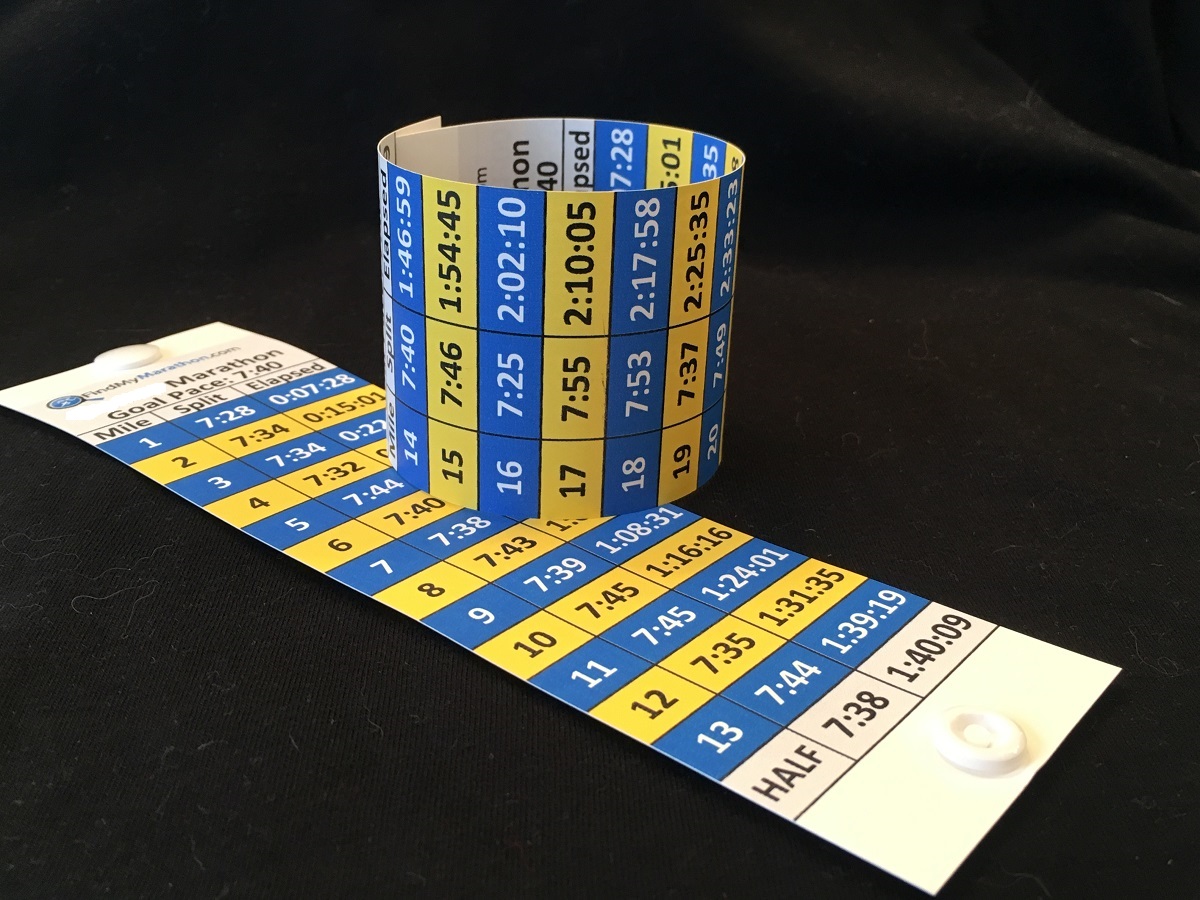
Pacing Strategy: During this section, the goal is to maintain an even level of effort across both uphill and downhill portions. Remember that it's still early in the race, making energy conservation a high priority. When you encounter uphill sections, concentrate on keeping your effort consistent rather than forcing the same pace you'd maintain on flat ground. Shorten your stride if necessary and resist the urge to push too hard. Use the downhill segments as opportunities to recover, but avoid the temptation to significantly increase your speed to make up time. Consistency is paramount at this stage. Listening to your body and adjusting your effort accordingly is crucial. If you're feeling good, adhere to your planned effort level. If an incline feels challenging, ease off slightly to preserve energy for the later stages of the race. Utilizing a Pace Band designed specifically for the California International Marathon can be a valuable tool in this varied terrain to help you stay on track with your overall race plan and ensure your effort level remains consistent.
Elevation Change: -100 feet overall
Key Features: Running through Fair Oaks area
Terrain: Continuing rollings hills with a net elevation loss
This middle segment of the course continues the pattern of a series of small, gradual rolling hills. This time, however, there is a net drop in elevation of the 6 miles - about 100 feet. During this section, you'll encounter both the biggest hill and the biggest descent - back-to-back. You'll run the uphill from Mile 10.4 to Mile 10.7 and rise 40 feet. Once you crest the top of the hill, you'll be rewarded by a downhill that drops you 80 feet from Mile 10.7 to 11.1.
Pacing Strategy: Your pace will naturally increase at the same effort level through this net-downhill section. The key here is to maintain that "even-effort" approach. This doesn't mean maintaining a perfectly consistent pace, but rather keeping your perceived exertion level steady and allow your pace to naturally fluctuate with the terrain. Focus on how your body feels rather than fixating on your watch splits during this section. Be wary of your pace on the uphill and downhill from Mile 10.4 to 11.1. It's still early in the race and running too aggressively either up or down the hill can be detrimental to your race goals later on.
Terrain: Continued rolling hills, but more downhills than uphills
Elevation Change: -90 feet overall
Key Features: Fair Oaks to entering Sacramento
As you progress through these miles, the frequency and intensity of the rolling terrain begin to diminish. You'll start to perceive a more consistent and gradual downward slope. This marks a transitional phase where the course gradually flattens out more consistently before the significant downhill to come. This section serves as a bridge, preparing your legs for the demands of sustained downhill running.
Pacing Strategy:During these miles, strategically begin to subtly increase your effort as the course flattens and the more consistent descent starts, but only slightly. You still have quite a ways to the finish. Aim to gradually align your pace with your target marathon pace, preparing your legs for the faster downhill running ahead. This section is about a smooth transition, ensuring your legs are ready to capitalize on the descent without a sudden increase in speed or effort.
Terrain: Course flattens out with continued overall descent
Elevation Change: -20 feet overall
Key Features: Enter Sacramento as crowds swell and the "50 block countdown"
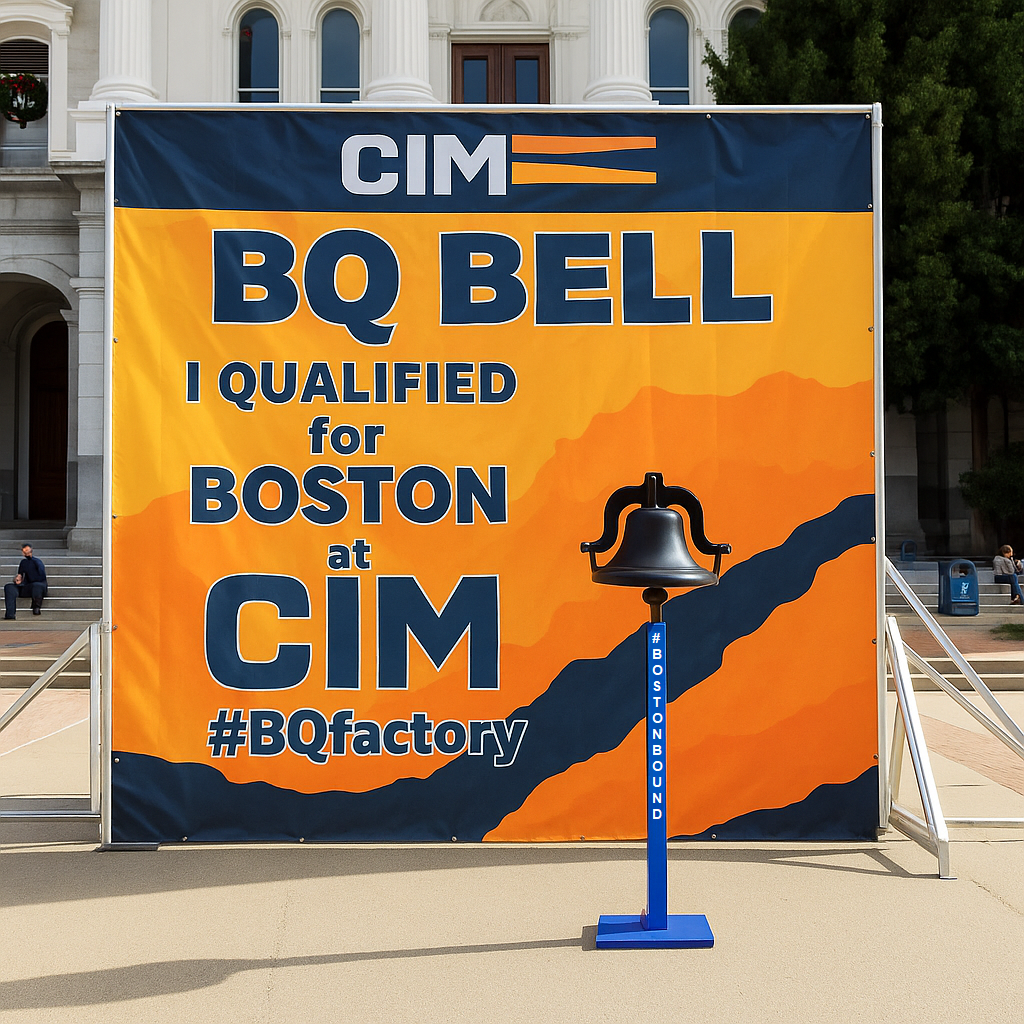
The final 10 kilometers offer a significant and net downhill with very small rollers. The only relatively significant climb left is the J Street Bridge over the American River. Here you'll climb and then descend a (hopefully) reasonable 20 feet. The last 4 miles of the marathon are marked by the "50 block countdown" from 57th St. to 8th St. near the finish. If you have managed your energy effectively in the earlier stages, this is your prime opportunity to aim for negative splits and potentially make up time.
Pacing Strategy:In this final section, focus on maintaining efficient running form to take advantage of the downhill. This often involves taking slightly shorter and quicker strides and allowing a subtle forward lean, engaging your core to control your descent. Be cautious of overstriding, which can lead to increased impact and potential quad fatigue. Allow gravity to assist you, but remain in control and maintain a consistent effort that feels strong but sustainable all the way to the finish line at the State Capitol.
With its fast, net-downhill course and generally mild December weather, CIM presents an excellent opportunity to achieve a personal best or qualify for the Boston Marathon. Success hinges on respecting the early rolling hills, maintaining consistent hydration and fueling, and executing a smart, effort-based pacing strategy. Best of luck on race day! Ensure that you're stay on the right pace at CIM by purchasing a Pace Band designed specifically created for the undulating CIM course and your specific goals.
Q: Is the California International Marathon a good race for achieving a Boston Marathon Qualifying (BQ) time?
A: Absolutely. CIM consistently ranks in the top 3 of our annual list of the "50 Best Boston Qualifying Marathons." Its combination of net downhill, cool temps, and steady terrain makes it favorable for runners chasing qualifying times and personal bests. Boston Qualifying percentages range from 16-20%.
Q: What kind of weather can I expect at the California International Marathon?
A: CIM takes place in early December, so weather conditions can be variable. Race start temperatures are typically in the low to mid-40s°F with finishing temperatures rising to a very manageable mid-50s at the finish. Although the point-to-point course does not run in a singular direction, a race day wind from the easterly direction would be most beneficial. Historical CIM weather.
Q: What pacing strategy should I use to achieve my goal times at the California International Marathon?
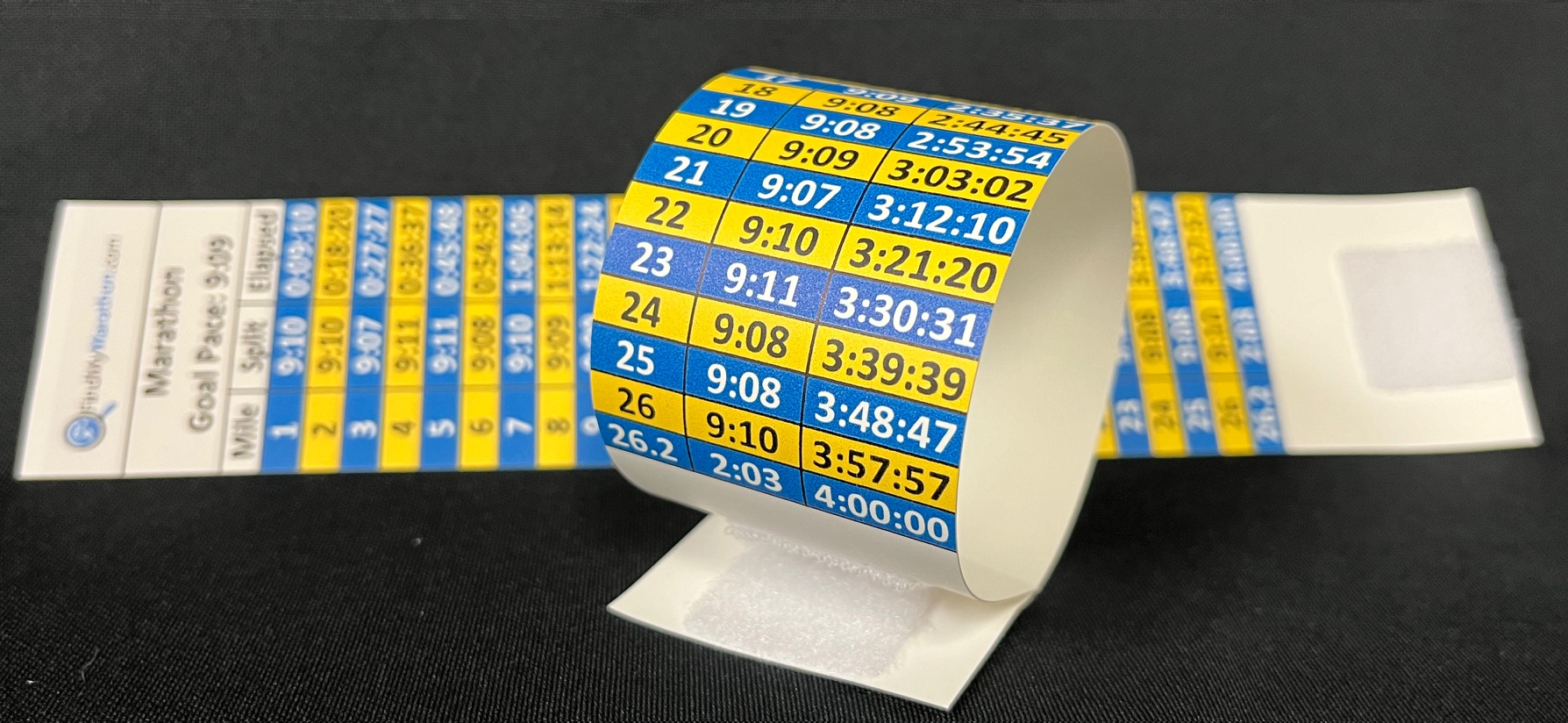
A: The net-downhill course with early downhill sections is perfect for an Evenly Paced or Conservative Start and a pacing strategy of Even Effort. Holding back in those fast early miles is crucial. Those who are confident they can hold back on the early miles, may want to plan for a Negative Split. Create a Pace Band specifically designed for the California International Marathon course with those strategies to ensure you'll run the right pace on race day.